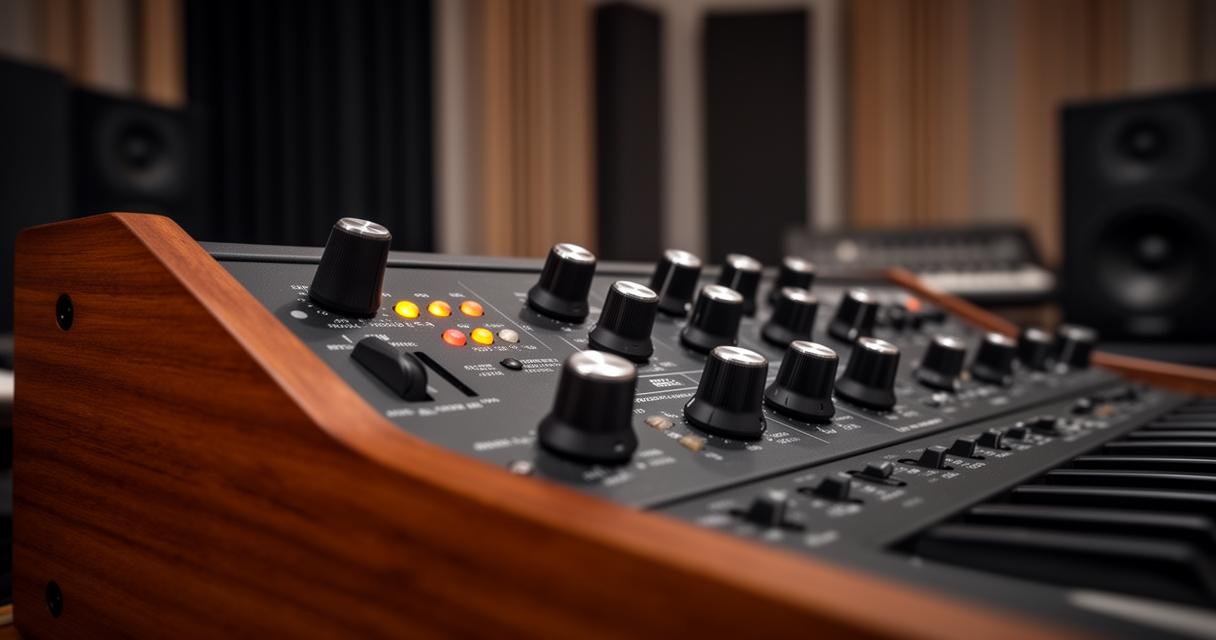
The Minimoog synthesiser has long held a revered place in the pantheon of electronic music production, renowned for its ability to generate thick, resonant bass lines that have defined countless genres. As we move through 2026, the demand for that distinctive analogue warmth has only intensified, yet acquiring an original Minimoog remains a significant investment beyond the reach of many producers. Fortunately, the world of VST plugins has evolved to offer remarkably faithful digital recreations, enabling musicians and sound designers to capture the essence of this iconic instrument without the financial burden or maintenance challenges of vintage hardware. This guide explores the best software solutions available today, providing a comprehensive roadmap for achieving those coveted Minimoog bass tones in your productions.
Understanding the legendary minimoog sound architecture
The classic oscillator configuration and filter design
At the heart of the Minimoog's sonic signature lies a deceptively simple yet profoundly effective architecture. The instrument features three voltage-controlled oscillators that can be tuned independently, allowing for rich harmonic layering and subtle detuning that imparts immediate character and depth. Each oscillator offers a selection of waveforms, including sawtooth, triangle, and square waves, which serve as the foundational building blocks of the sound. When these oscillators are combined, the resulting timbral complexity provides a thickness that single-oscillator designs simply cannot replicate. The interplay between these oscillators is fundamental to the Minimoog's ability to produce bass lines that feel both massive and articulate, cutting through dense mixes while retaining a warm, organic quality.
Equally crucial to the Minimoog's legendary status is its filter section, specifically the four-pole low-pass filter designed by Bob Moog himself. This filter exhibits a pronounced resonance peak that can be pushed to the point of self-oscillation, adding harmonic overtones and a sense of liveliness to the sound. The filter's response is not merely a matter of removing frequencies; it actively shapes the character of the tone, imparting a distinctive warmth and smoothness that has become synonymous with classic analogue synthesis. The envelope generator controlling this filter allows for precise shaping of the attack, decay, sustain, and release phases, enabling everything from punchy, percussive bass stabs to slowly evolving, expressive lines. Understanding this architecture is essential for anyone seeking to recreate the Minimoog's sound, as it informs both the selection of appropriate VST plugins and the techniques used to programme convincing patches.
Why the Minimoog Bass Tone Remains Unmatched in Modern Production
The enduring appeal of the Minimoog bass tone in contemporary music production can be attributed to several factors that transcend mere nostalgia. Firstly, the instrument's analogue circuitry introduces subtle variations and imperfections that digital systems have historically struggled to emulate. These minute fluctuations in pitch, amplitude, and harmonic content contribute to a sense of movement and life that keeps the sound engaging over extended listening periods. Unlike perfectly stable digital oscillators, the Minimoog's components drift slightly, creating a natural, breathing quality that feels inherently musical. This organic character is particularly valuable in bass lines, where monotony can quickly undermine a track's energy and groove.
Moreover, the Minimoog's design philosophy prioritises immediacy and musicality over technical complexity. The layout encourages experimentation and rapid sound shaping, allowing producers to dial in usable tones with minimal effort. This accessibility has cemented the instrument's place in countless studios, from basement home setups to world-renowned facilities. In an era where digital production can sometimes feel clinical or overly precise, the Minimoog's inherent warmth and forgiving nature offer a welcome counterbalance. Modern producers continue to seek out this sound because it provides a foundation that sits comfortably in mixes across genres, whether supporting the driving rhythms of techno, the syncopated grooves of funk, or the melodic underpinnings of progressive rock. The Minimoog bass tone delivers weight and presence without overwhelming other elements, making it an invaluable tool for both seasoned professionals and emerging artists alike.
Top-rated vst plugins for authentic minimoog bass recreation
Premium software synthesisers with circuit-level modelling
For those pursuing the most authentic Minimoog experience in software form, several premium VST plugins employ advanced circuit-level modelling techniques that replicate the behaviour of the original hardware with astonishing accuracy. These instruments do not merely approximate the sound; they simulate the electrical pathways and component interactions that give the Minimoog its distinctive voice. One standout example is the offering from a leading developer known for meticulous emulation work, which captures the subtle non-linearities and temperature-dependent characteristics of vintage analogue circuits. Users frequently report that these plugins respond to playing dynamics and modulation in ways that closely mirror the hardware, providing a tactile, expressive experience that feels remarkably organic.
Another highly regarded option comes from a renowned software house that has built a reputation on delivering state-of-the-art virtual instruments for professional studios. Their Minimoog emulation includes detailed modelling of each component, from the oscillators through the filter to the output stage, ensuring that every nuance of the original sound is preserved. This level of precision is particularly evident in the low-frequency range, where the plugin reproduces the characteristic punch and warmth that define classic Minimoog bass lines. These premium solutions often include additional features such as polyphonic modes, expanded modulation options, and integrated effects, providing flexibility that extends beyond the capabilities of the original instrument while maintaining absolute fidelity to its core sonic identity. For producers who demand the highest standard of realism and are willing to invest in their tools, these circuit-modelled VST plugins represent the pinnacle of Minimoog recreation in the digital domain.
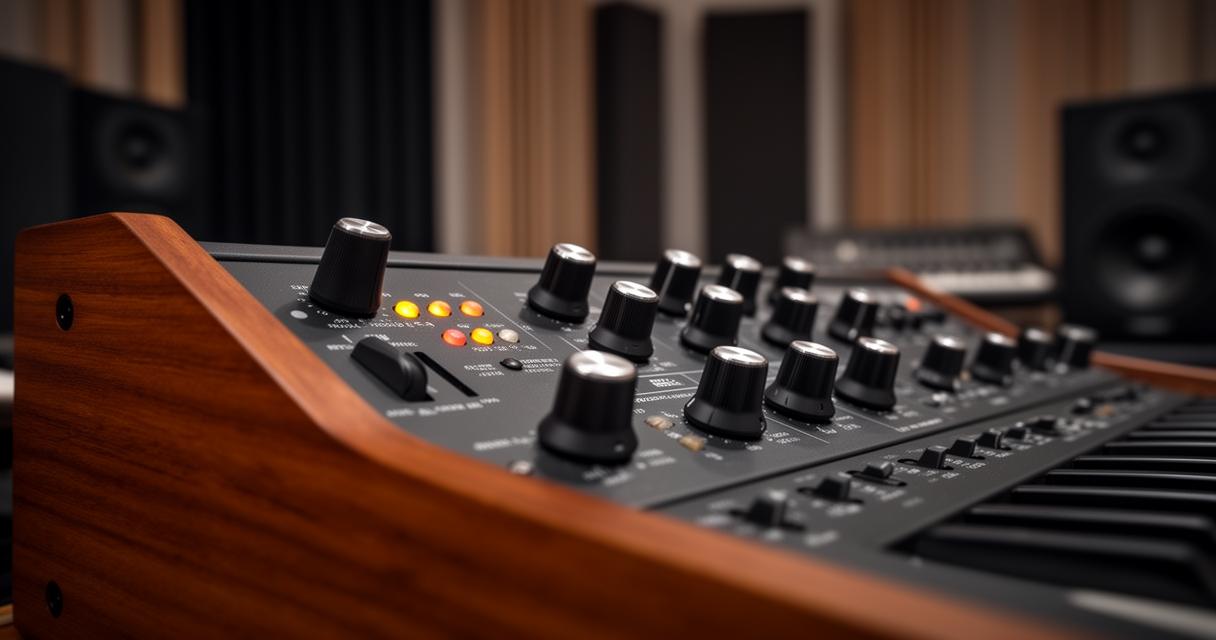
Budget-friendly alternatives that deliver professional results
Not every producer has the resources to invest in premium software, yet the desire to access authentic Minimoog bass tones remains strong across all budget levels. Fortunately, the market offers several cost-effective VST plugins that deliver impressive results without requiring a substantial financial outlay. These alternatives may not replicate every minute detail of the original circuitry, but they capture the essential character and musicality that make the Minimoog sound so compelling. Developers of these plugins often focus on the key elements that define the bass tone, such as the oscillator blend, filter response, and envelope shaping, ensuring that users can achieve convincing patches for a fraction of the cost.
One notable example is a well-established freeware synthesiser that has gained a loyal following among bedroom producers and professional sound designers alike. Its architecture closely mirrors that of the Minimoog, featuring three oscillators, a resonant low-pass filter, and comprehensive modulation options. While it may lack the circuit-level precision of more expensive alternatives, it provides a solid foundation for programming punchy, expressive bass lines that sit comfortably in a mix. Similarly, several budget-priced commercial plugins offer streamlined interfaces and focused feature sets that make them ideal for rapid sound design and live performance. These instruments often include curated preset libraries that showcase the range of bass tones achievable, allowing users to start creating immediately while learning the underlying synthesis techniques. For producers working within financial constraints, these budget-friendly alternatives prove that exceptional Minimoog-style bass sounds are accessible to everyone, democratising access to one of electronic music's most iconic timbres.
Practical production techniques for minimoog-style bass lines
Programming patches from scratch using vst parameters
Creating convincing Minimoog bass patches from scratch requires a methodical approach to the instrument's parameters, guided by an understanding of how each element contributes to the final sound. Begin by setting all three oscillators to sawtooth waveforms, as this provides the richest harmonic content and serves as the ideal starting point for bass tones. Detune the second and third oscillators slightly relative to the first, introducing subtle beating and phase interactions that add width and movement to the sound. This detuning should be minimal, often just a few cents, to avoid dissonance while still creating the impression of a thicker, more complex waveform. Many producers find that tuning one oscillator down an octave can add sub-bass weight, although this technique should be used judiciously to avoid overwhelming the low-frequency spectrum.
Next, turn your attention to the filter section, which is where much of the Minimoog's character resides. Set the cutoff frequency to taste, typically starting around the midpoint and adjusting downward to focus on the fundamental and lower harmonics. Increase the resonance to introduce emphasis at the cutoff point, but avoid pushing it so far that the filter begins to self-oscillate unless that effect is intentionally desired. The envelope generator controlling the filter should be configured with a fast attack to ensure the bass hits immediately, a short decay that brings the brightness down to a sustain level, and a release time that allows the note to fade naturally without cutting off abruptly. These envelope settings are critical for achieving the punchy, responsive feel that makes Minimoog bass lines so effective in rhythmic contexts. Experiment with different combinations of these parameters, listening carefully to how each adjustment affects the overall tone, and do not hesitate to automate filter cutoff and resonance to add dynamic interest over the course of a phrase or section.
Essential Processing Chain and Mixing Strategies for Vintage Warmth
Even the most meticulously programmed Minimoog patch can benefit from thoughtful processing that enhances its vintage character and ensures it sits properly within a mix. One of the first considerations is saturation or subtle distortion, which emulates the harmonic richness generated by analogue circuitry and tape. Applying a gentle saturation plugin can add warmth and glue, thickening the bass tone and helping it occupy more sonic space without increasing its actual level. Choose a plugin that offers multiple saturation types, experimenting with subtle valve or tape algorithms to find the flavour that best complements your patch. Be cautious not to overdo this effect, as excessive distortion can muddy the low end and reduce the clarity that makes the Minimoog sound so effective.
Following saturation, consider employing a high-quality equaliser to shape the frequency response and remove any unwanted rumble or harshness. A gentle high-pass filter set below the fundamental frequency can clean up subsonic content that may not be audible but still consumes headroom and processing power. Conversely, a subtle boost in the upper midrange can add presence and definition, ensuring the bass line remains audible on smaller playback systems where the lowest frequencies may be less pronounced. Compression is another valuable tool, though it should be applied with restraint to preserve the dynamic character of the performance. A slow attack and moderate ratio can help even out level variations without squashing the transient punch that gives the bass its impact. Finally, a touch of reverb or delay can add depth and space, though these effects should be used sparingly in bass frequencies to avoid muddying the mix. By combining these processing techniques with careful programming, producers can achieve Minimoog-style bass lines that capture the warmth, power, and musicality of the original instrument, delivering professional results that resonate with listeners and elevate any production.