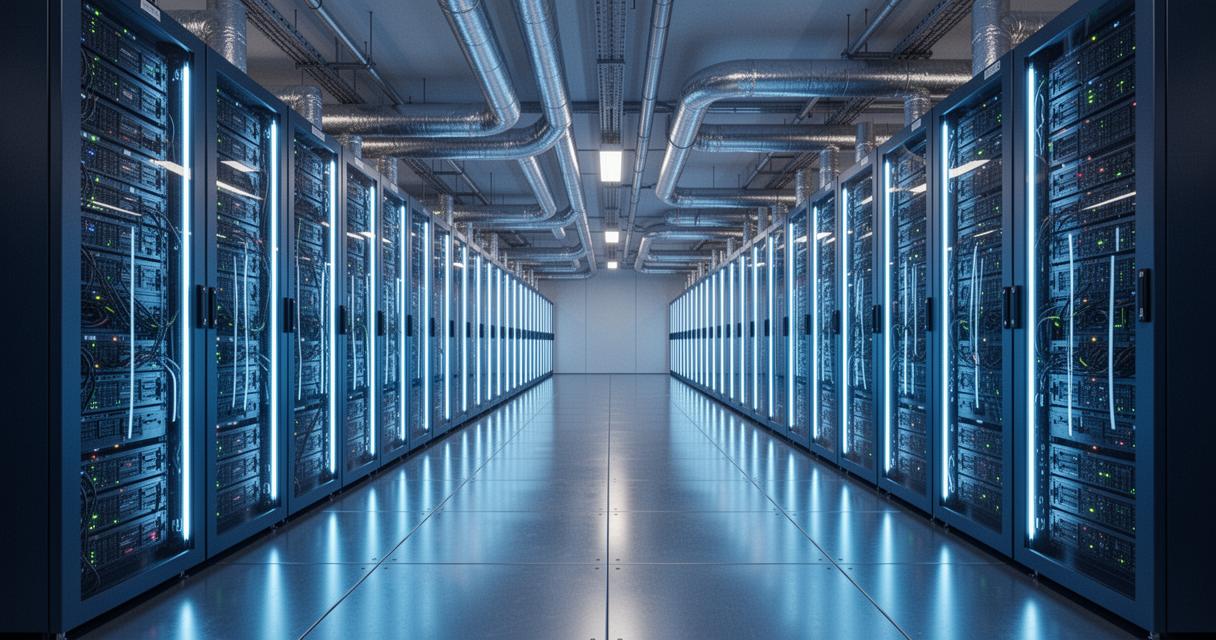
The convergence of artificial intelligence and cloud computing is fundamentally altering the way businesses operate, innovate, and compete. From smarter infrastructure management to the proliferation of generative tools, these technologies are no longer the preserve of large enterprises — they are reshaping industries of every scale and sector.
The essentials
- The integration of artificial intelligence and cloud computing is transforming business operations across all scales and sectors.
- AI-driven automation is increasingly embedded in cloud infrastructure to streamline workflows, reduce human error, and accelerate software deployments.
- Machine learning algorithms optimize cloud resource management by predicting demand and dynamically adjusting compute capacity to improve performance.
- Edge computing complements centralized cloud platforms by processing data closer to its source, which is critical for real-time applications and IoT.
- Generative AI is being integrated into cloud services to enhance capabilities in content creation, code generation, and customer engagement.
- Advanced security and governance are becoming essential as the convergence of these technologies expands the potential attack surface for organizations.
How artificial intelligence is reshaping cloud infrastructure
Across the technology landscape, platforms dedicated to digital transformation are increasingly blending AI development with cloud computing, software engineering, and DevOps to drive meaningful business growth. A resource hub such as cyberstackhq brings together high-tech news, emerging technology insights, and practical guidance on everything from cybersecurity to workflow optimisation, reflecting just how interconnected these domains have become.
The Rise of AI-Driven Automation in Cloud Environments
Cloud environments are rapidly evolving beyond simple storage and computation. Today, business automation sits at the heart of cloud strategy, with AI models embedded directly into infrastructure to streamline repetitive tasks, accelerate deployments, and reduce human error. Office automation solutions now encompass a broad range of workflow optimisation tools, business software, and collaboration platforms that fundamentally change how teams work together. This shift means that organisations adopting cloud computing are also, almost inevitably, adopting AI-powered processes — the two are increasingly inseparable.
Cybersecurity is another domain undergoing significant transformation within cloud environments. Expert guidance on data protection, network security, and threat prevention has become essential reading for any business migrating workloads to the cloud, where attack surfaces can expand quickly if left unmanaged.

Smarter resource management through machine learning
Machine learning is proving particularly valuable in optimising resource allocation within cloud platforms. By analysing usage patterns and predicting demand, ML algorithms can dynamically adjust compute capacity, cutting unnecessary expenditure and improving performance. This capability aligns closely with the broader field of data science, where the ability to extract actionable insights from vast datasets is transforming operational decision-making. Soft computing techniques, which embrace uncertainty and approximation rather than rigid logic, are also finding their place in these environments, enabling more flexible and adaptive systems.
Emerging Technologies Defining the Future of AI and Cloud Computing

Looking ahead, several emerging technologies are poised to redefine the relationship between AI and cloud infrastructure, introducing new capabilities whilst also raising fresh challenges around governance, security, and integration.
Edge computing and its growing role alongside cloud platforms
Edge computing is increasingly positioned as a complement rather than a rival to centralised cloud platforms. By processing data closer to its source, edge architectures reduce latency and bandwidth consumption — qualities that are especially critical for Internet of Things applications and real-time industrial systems. The integration of AI with edge infrastructure, sometimes called Edge AI, is a significant area of research and development, with applications spanning Industry 4.0, smart manufacturing, and connected healthcare. Hybrid architectures that combine edge intelligence with cloud-scale processing are emerging as the preferred model for organisations that need both speed and depth in their data pipelines.
Computer vision is one of the most compelling use cases at this intersection, enabling machines to interpret visual data in real time without relying on round-trips to distant data centres. Meanwhile, blockchain technology is being explored as a means of securing data exchanges between edge nodes and cloud backends, adding an additional layer of trust to distributed systems.

Generative ai tools and their integration into cloud services
Generative AI has rapidly moved from research curiosity to practical cloud service, with major platforms embedding large language models and image generation capabilities directly into their offerings. For businesses, this opens new possibilities in content creation, user interface design, code generation, and customer engagement. SEO strategies are also evolving in response, with technical SEO practitioners increasingly leveraging AI to analyse site performance, refine keyword research, and develop smarter content optimisation strategies. Web development itself is being reshaped, as AI-assisted coding tools accelerate the creation of interfaces and reduce the barrier to entry for building sophisticated digital products. The future of AI and cloud computing, it seems, will be defined not by any single breakthrough, but by the cumulative intelligence woven into every layer of the digital stack.